
Korean Beef Bibimbap with Spicy Gochujang Sauce

A vibrant and flavorful Korean dish consisting of sautéed vegetables, marinated beef, and a perfectly fried egg, all served over warm rice and topped with a spicy gochujang sauce. Creating this dish requires technique and patience but yields a restaurant-quality meal that's delicious and satisfying.
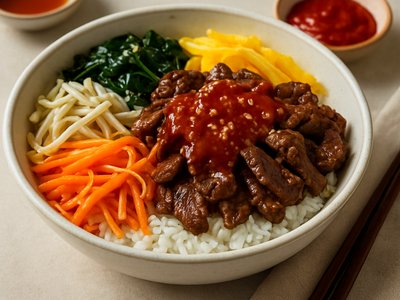
Korean Beef Bibimbap with Spicy Gochujang Sauce

Nutrition Information Per Serving

540g
Calories
34g
Protein
65g
Carbs
18g
Fat
5g
Fiber

Korean Beef Bibimbap with Spicy Gochujang Sauce

#bibimbap#korean#beef#lunch#spicy#healthy
Prep30 min
Cook30 min
Yields4 servings
Difficultymedium

Ingredients

  • 2 cups cooked short-grain rice
  • 1 lb beef sirloin, thinly sliced
  • 3 tbsp soy sauce
  • 2 tbsp sesame oil
  • 1 tbsp sugar
  • 1 tsp minced garlic
  • 1 tsp grated ginger
  • 1 cup spinach, blanched
  • 1 cup zucchini, julienned
  • 1 cup carrot, julienned
  • 1 cup bean sprouts
  • 2 eggs
  • 4 tbsp gochujang (Korean chili paste)
  • 2 tbsp water
  • 1 tbsp rice vinegar
  • 2 tsp sesame seeds
  • 4 green onions, sliced
  • Salt and pepper to taste

Preparation

  • 1.

    In a bowl, mix soy sauce, sesame oil, sugar, minced garlic, and grated ginger. Add the sliced beef and marinate for at least 30 minutes.

  • 2.

    While the beef is marinating, prepare the vegetables. Blanch the spinach in boiling water for about 30 seconds, then shock in ice water. Squeeze out excess water and season with a pinch of salt and a drizzle of sesame oil.

  • 3.

    Sauté zucchini and carrot in a pan with a little oil until tender but still crisp. Set aside.

  • 4.

    In the same pan, lightly sauté bean sprouts for 2-3 minutes, adding salt to taste. Set aside with other vegetables.

  • 5.

    In a separate skillet, heat a small amount of oil over medium heat and fry eggs sunny side up until the edges are crispy.

  • 6.

    In the same pan, cook the marinated beef over high heat for about 3-5 minutes until it's cooked through. Set aside.

  • 7.

    To make the gochujang sauce, mix gochujang, water, and rice vinegar in a small bowl until smooth.

  • 8.

    To assemble, in a large bowl, add a serving of rice as the base. Neatly arrange the sautéed vegetables, beef, and fried egg on top of the rice. Drizzle with gochujang sauce, sprinkle with sesame seeds, and top with sliced green onions.

  • 9.

    Serve immediately, mixing everything together before eating. Enjoy your homemade bibimbap!

Complete Nutrition Information

Macronutrients

Fiber:5g
Sugar:6g
Added Sugar:1g
Saturated Fat:5g
Trans Fat:0g
Cholesterol:155mg
Sodium:880mg

Vitamins

Vitamin A:120mcg
Vitamin C:20mg
Vitamin D:0mcg
Vitamin E:2mg
Vitamin K:30mcg
Thiamin (B1):0.3mg
Riboflavin (B2):0.3mg
Niacin (B3):5mg
Vitamin B6:0.5mg
Folate:65mcg
Vitamin B12:1.5mcg

Minerals

Calcium:40mg
Iron:4.5mg
Magnesium:50mg
Phosphorus:250mg
Potassium:600mg
Zinc:5mg
Copper:0.3mg
Manganese:0.6mg
Selenium:25mcg

Recipe Generator

Checking limits...

Tell us your preferences and we will create a personalized Korean Beef Bibimbap with Spicy Gochujang Sauce for you

Nearby Restaurants

You Might Also Like